Evaluating Cute Monsters 3D SVG Multilayer Files for Laser Cutting and Crafting
For crafters, hobbyists, and professional designers working with digital cutting machines, the appeal of three-dimensional wall art has grown significantly in recent years. Among the various designs available, Cute Monsters 3D SVG Multilayer Files have emerged as a popular choice for creating whimsical home decor. These digital assets are specifically engineered to produce depth and texture through layering, transforming flat materials into engaging visual pieces. Understanding the technical specifications, material compatibility, and design constraints of these files is essential for anyone considering them for their next project.
Understanding the Design Structure
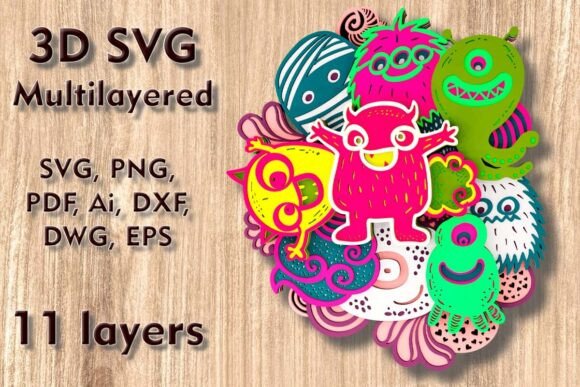
The core feature of this design is its multilayered construction. The Cute Monsters Mundala Svg consists of 11 separate layers. This high layer count is what allows for the pronounced 3D effect, where each successive layer adds shadow and dimension to the final piece. Unlike simple single-layer cutouts, these files require precise alignment during assembly to ensure the intended aesthetic is achieved. The design is versatile, suitable for various cutting technologies including Cricut, Silhouette, Glowforge laser cutters, and CNC routers.
The dimensions of the design are set at 290 mm in height and 250 mm in width (approximately 11.4 x 9.9 inches). This size is generally considered ideal for standard home decor applications, such as nursery walls, bedroom accents, or gift items. However, users should note that while the size can be easily increased without significant loss of quality, reducing the design requires caution. Because the file contains thin elements inherent to intricate monster and mandala patterns, scaling down too much may result in fragile pieces that are difficult to weed, handle, or assemble without breaking.
Material Compatibility and Selection
One of the primary advantages of these Cute Monsters 3D SVG Multilayer Laser Cutting Files is their broad material compatibility. The files are optimized for use with a wide range of substrates, including:
- Plywood
- MDF (Medium-Density Fiberboard)
- Wood
- Acrylic
- Paper
- Cardstock
- Cardboard
- Aluminum
The choice of material significantly impacts the final outcome and the difficulty of the project. For beginners, paper and cardstock are often recommended because they are inexpensive and easy to cut with electronic cutting machines like Cricut or Silhouette. These materials allow for rapid prototyping and practice with layer alignment. For a more durable and premium finish, plywood and MDF are excellent choices, particularly when using laser cutters. These wood-based materials provide rigidity and a natural aesthetic that complements the whimsical nature of the monster design. Acrylic offers a modern, glossy look but requires careful handling to avoid scratching during assembly. Aluminum is less common for this type of decor but can be used for specialized industrial-style art if the cutting machine supports it.
File Formats and Technical Accessibility
Upon purchase, users receive a ZIP folder containing multiple file formats, ensuring compatibility with virtually any design software or cutting machine. The included formats are:
- SVG (Scalable Vector Graphics)
- Layered SVG files
- DXF (Drawing Exchange Format)
- DWG (AutoCAD Drawing)
- EPS (Encapsulated PostScript)
- AI (Adobe Illustrator)
- PNG (Portable Network Graphics)
- PDF (Portable Document Format)
The presence of layered SVG files is particularly valuable. These files preserve the separation of the 11 layers, allowing users to import them directly into software like Adobe Illustrator, CorelDRAW, or Inkscape without needing to manually separate elements. This saves considerable time and reduces the risk of errors during the preparation phase. For users of CNC machines, DXF and DWG formats provide the necessary vector data for toolpath generation. The inclusion of PNG and PDF files serves as useful references for visualizing the final assembled product.
Practical Considerations and Tradeoffs
While the Cute Monsters 3D SVG Multilayer Files offer a compelling design, there are practical considerations to evaluate before starting a project. The most significant factor is the assembly process. With 11 layers, alignment must be precise. Users should expect to spend time measuring, gluing, and adjusting each layer. Using spacers or foam tape between layers can enhance the 3D effect but adds complexity to the build. Additionally, the thin elements mentioned earlier mean that material selection must match the capabilities of the cutting machine. A dull blade on a Cricut or incorrect laser settings on a Glowforge can result in incomplete cuts, making weeding difficult and potentially ruining the delicate parts of the design.
Another consideration is the time investment. Cutting 11 separate layers, especially from thicker materials like plywood, takes longer than single-layer projects. Furthermore, painting or finishing each layer before assembly can dramatically improve the visual impact but also increases the overall project duration. For those seeking quick crafts, this design may not be the most efficient choice. However, for those who enjoy the process of detailed crafting and want a high-impact final product, the effort is often justified.
Ideal Use Cases and Alternatives
This design is a strong fit for several scenarios. It is particularly well-suited for creating personalized home decor, such as nursery art or children’s room accents, where the cute monster theme appeals to younger audiences. It also makes for a thoughtful handmade gift, demonstrating effort and creativity. For educators or workshop leaders, the layered nature of the file can serve as an excellent teaching tool for demonstrating depth, shadow, and assembly techniques in crafting classes.
However, there are situations where alternatives may be worth considering. If a user lacks access to a laser cutter or a precise electronic cutting machine, the intricate details of this design may be challenging to reproduce with manual tools. In such cases, simpler, fewer-layer designs might be more appropriate. Additionally, if the goal is to create large-scale wall art exceeding two feet in height, users should verify that their machine’s bed size can accommodate the scaled-up dimensions or be prepared to tile the design, which introduces additional assembly challenges.
Ultimately, the decision to use Cute Monsters 3D SVG Multilayer Files depends on the crafter’s skill level, available equipment, and willingness to engage in a multi-step assembly process. For those equipped with the right tools and patience, these files provide a robust framework for creating enchanting, professional-quality 3D art. By carefully selecting materials, respecting the design’s size constraints, and leveraging the provided file formats, users can transform digital vectors into tangible, decorative wonders.